Funny, insightful, hopeful, and timely

The Economist outs out an entertaining recap of the polls over the past few days, weeks, and months. For those of you reading this from LiveJournal, I’m sorry – LJ doesn’t know how to handle Economist’s embed code, no matter what I do. Please click on the link at the bottom of the post that takes you over to my blog site, and watch the video there.

(Stick around through the commercial, it’s worth it)

Returning home, Day 14

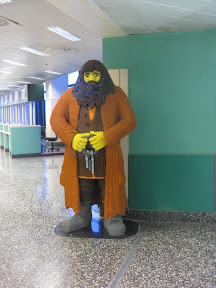
After Dubrovnik we had another day at sea as the ship sailed back to Rome. For more details about the day at sea, ask Amanda about the bee sting from Corfu. (See, I told you that would be an interesting story!) Then bright and early the morning (Saturday Morning) we docked, we got up, got going, got out, and got a bus to the Rome airport, and flew to Malpensa, just outside of Milan. Due to the entertaining vagaries of inexpensive flights, our flight from Malpensa back to Boston wasn’t until the next day (Sunday). We stayed overnight at a nice little hotel, even if it wasn’t convenient to get into Milan and wander around (another excuse to go back someday). After out stay, we went back to the Malpensa airport. We’d seen some entertaining sculpture when we’d passed through the first time at the beginning of our trip, and now we had enough time to go take pictures before flying back to Boston. So here’s a small photo album of two Harry Potter themed sculptures: one of Harry, and one of Hagrid. There may have been more but we didn’t find them. Oh. And they’re made out of Legos. And life size. Take a look at all the pictures to see us standing next to them!

From Malpensa Airport

Dubrovnik, day 11

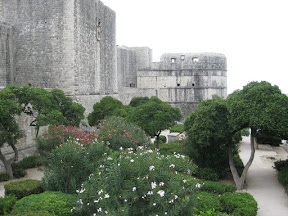
As Amanda puts it, “I never knew I needed to go to Croatia until I went to Croatia.” Dubrovnik is a perfect medieval city, still in its medieval construction, complete with a moat (now filled in, and part of it is the area highway) and bridge, stone walls that circumnavigate the city, buildings where you can reach out and touch your neighbor, monasteries, churches, town squares, and fountains all packed inside. Pictures made in the middle ages can still be used as accurate maps. For a fee you can go up on the walls and walk around the city, which we, unfortunately, did not have time to do. Although the modern Dubrovnik has grown up around the old city, they keep the character of the city, and are currently repairing some of the damage incurred during the turbulent breakup of the region in the 90’s. No cars are allowed inside the city, and even the over-sized delivery sleds need to be out by a certain time each morning, to minimize the impact. Inside is also a pharmacy that has been in operation since the 14th century, originally as part of Franciscan monastery, now as a modern pharmacy operation. We went early enough in the morning that we avoided a lot of the crowds, but still managed to do a little shopping (excellent ice cream on the main thoroughfare), and a fair amount of sightseeing, including the Dominican monastery and it’s Titian, and a _lot_ of cobblestone. The amount of stone makes modern cities look positively lush with vegetation, but I suppose when fire is one of the worst catastrophes that can befall you, and firefighting technologies aren’t advanced enough, stone is your friend.
From Dubrovnik

Corfu, Day 10

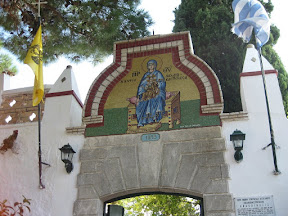
The island of Corfu is all the way up the western coastline of Greece, and you can even see Albania from it’s shores. It is also supposedly where Odysseus’ ship was petrified, mere yards from returning to port. While here we visited a working monastery (where Amanda was stung by a bee.. ask her about it sometime), the old town (complete with a reproduction of the Rue di Rivoli), and a small seaside town. Not in that order. We also saw some of the best Byzantine art and Orthodox icons of the whole trip. Of note to me were the icons of St. George and the Dragon, something I would expect more in England than in Greece.

From Corfu